
Understanding Walmart to Amazon Dropshipping Automation
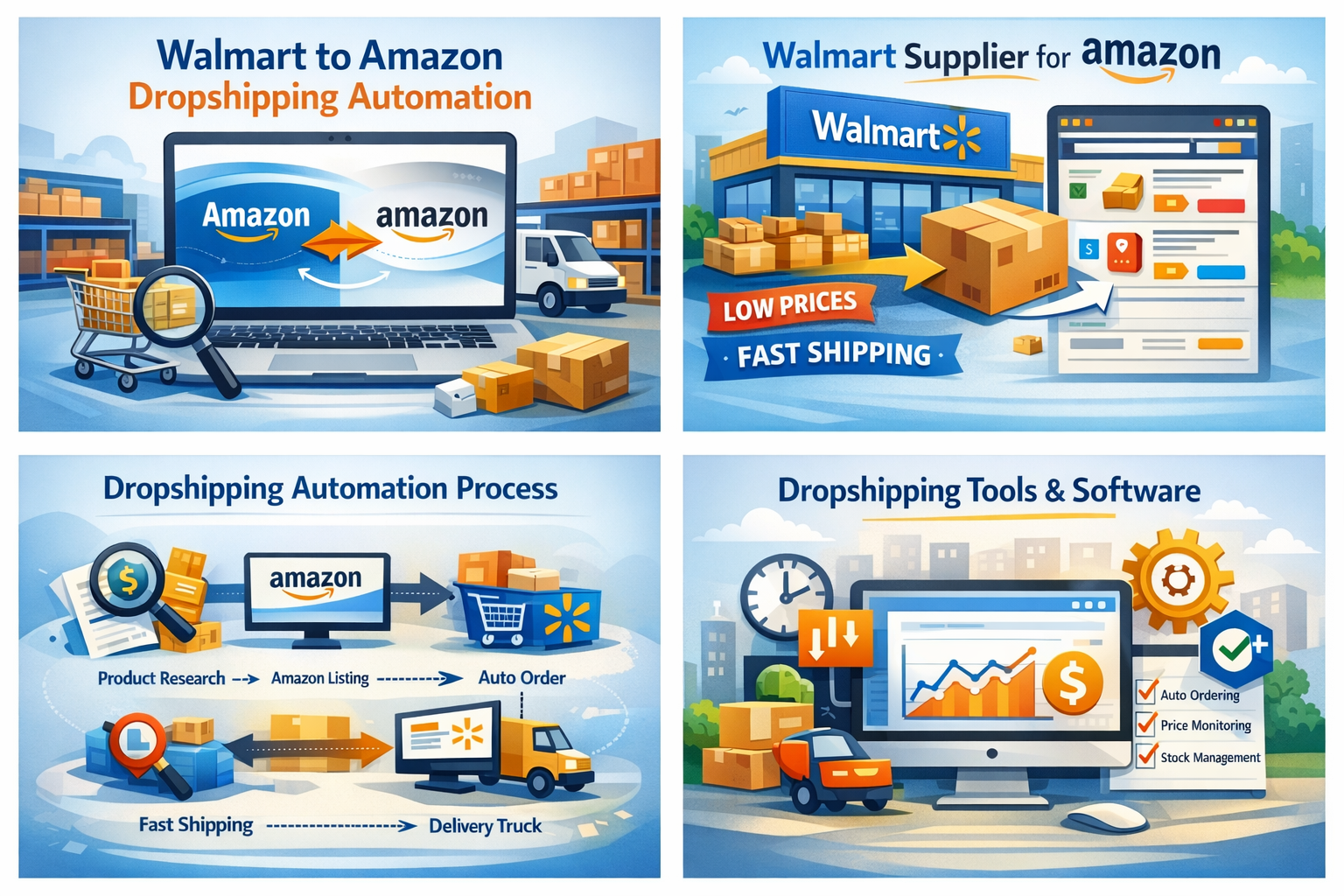
Walmart to Amazon Dropshipping Automation is a business model where sellers list products on Amazon while sourcing those products from Walmart. When a customer places an order on Amazon, the order is automatically placed on Walmart, and Walmart ships the product directly to the customer.
This model is appealing because it removes the need for inventory storage, packaging, and manual order processing. Automation software handles repetitive tasks, allowing sellers to focus on strategy and scaling rather than daily operations.
What Is Walmart to Amazon Dropshipping Automation?
At its core, Walmart to Amazon Dropshipping Automation uses technology to streamline product listing, pricing updates, inventory tracking, and order fulfillment. Instead of manually copying product details or placing orders, automation tools sync Walmart and Amazon in real time.
This approach is especially attractive for beginners because it lowers startup costs and reduces human error. However, it also requires careful compliance with both platforms’ policies.
How Automated Dropshipping Differs from Manual Dropshipping
Manual dropshipping involves checking prices, stock levels, and placing orders one by one. Automation replaces these steps with software that works 24/7. Automation improves speed, reduces mistakes, and makes it easier to manage hundreds or even thousands of listings.
Why Walmart Is Used as a Supplier for Amazon
Walmart is one of the largest retailers in the world, making it a popular supplier for dropshippers.
Walmart Product Variety and Pricing Advantages
Walmart offers millions of products across electronics, home goods, toys, groceries, and more. Frequent discounts and rollback deals create pricing gaps that sellers can leverage for profit on Amazon.
Shipping Speed and Nationwide Coverage
Walmart’s fast shipping and extensive logistics network help ensure timely delivery, which is critical for maintaining good Amazon seller metrics.
How Amazon Fits into the Dropshipping Automation Model
Amazon provides access to millions of active buyers who trust the platform.
Amazon Marketplace Reach and Buyer Trust
Amazon customers are more likely to purchase due to fast shipping expectations and strong buyer protection. This trust makes it easier to convert listings into sales.
Amazon Fulfilled vs Merchant Fulfilled Listings
Most Walmart to Amazon dropshipping automation sellers use Merchant Fulfilled Network (MFN), since products are shipped directly from Walmart to the customer.
Step-by-Step Process of Walmart to Amazon Dropshipping Automation
Product Research and Price Gap Analysis
Successful automation begins with finding products that have:
- High demand on Amazon
- Lower prices on Walmart
- Healthy profit margins after fees
Listing Creation and Inventory Sync
Automation tools import product data from Walmart and create Amazon listings. Inventory and pricing are continuously monitored to avoid overselling.
Order Processing and Tracking Automation
When a sale occurs, the software automatically places the order on Walmart, inputs the customer’s shipping address, and uploads tracking information to Amazon.
Tools and Software Used for Automation
Automation relies heavily on specialized software.
Auto-Ordering and Price Monitoring Tools
These tools handle order placement, price changes, and stock availability in real time.
Repricing and Stock Management Software
Repricers adjust Amazon prices automatically to stay competitive while protecting profit margins.
Profit Margins and Cost Breakdown
Typical Fees, Expenses, and ROI Expectations
Common costs include:
- Amazon seller fees
- Automation software subscriptions
- Walmart shipping costs
Profit margins typically range from 5% to 15% per product, depending on competition and pricing efficiency.
Policy Risks and Compliance Considerations
Amazon Dropshipping Policy Rules
Amazon allows dropshipping but requires sellers to be the seller of record. Packaging, invoices, and branding must not reveal Walmart as the supplier. Sellers should review official Amazon policies via the Amazon Seller Central website: https://sellercentral.amazon.com
Walmart Account Limitations
Frequent large orders or mismatched addresses may trigger Walmart account restrictions. Using multiple accounts or business accounts can help reduce risk.
Pros and Cons of Walmart to Amazon Dropshipping Automation
Pros
- Low startup costs
- No inventory storage
- Scalable with automation
Cons
- Policy risks
- Thin profit margins
- Dependence on third-party platforms
Scaling Strategies for Long-Term Success
Virtual Assistants and Hybrid Automation
Many sellers combine automation software with trained virtual assistants to handle exceptions, customer messages, and account health management.
FAQs
1. Is Walmart to Amazon Dropshipping Automation legal?
Yes, but only if you follow Amazon’s dropshipping policies strictly.
2. How much money do I need to start?
Most sellers start with $500–$2,000 to cover software and order costs.
3. Can Amazon suspend my account?
Yes, if policies are violated or customer complaints increase.
4. Is automation fully hands-off?
No. Monitoring and optimization are still required.
5. What products work best for this model?
Home goods, toys, and seasonal items often perform well.
6. Is this model sustainable long-term?
It can be, if managed carefully and scaled responsibly.
Conclusion
Walmart to Amazon Dropshipping Automation offers a low-barrier entry into eCommerce while leveraging powerful platforms and automation tools. Although it comes with policy risks and modest margins, sellers who prioritize compliance, smart product selection, and operational discipline can build a scalable and profitable business.
Like any online model, success depends on education, patience, and continuous optimization.